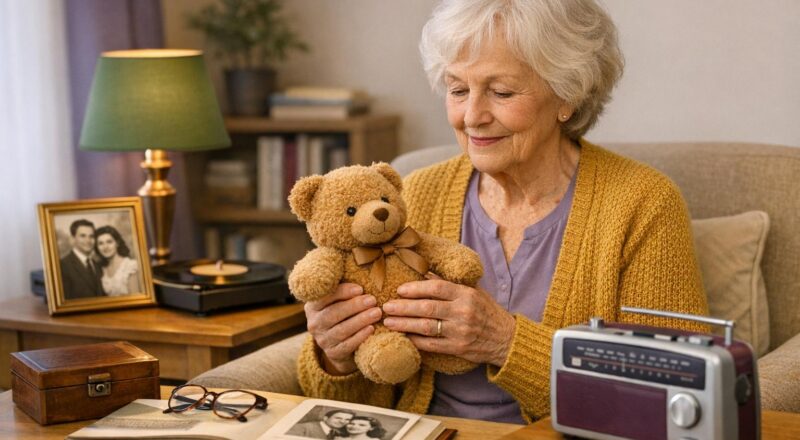
Sometimes the answer to a hard moment is something you can hold.
Verbal interventions have limits. When your parent is mid-agitation, when sundowning starts, when a transition is going badly, the right words may not exist. The body is asking for something the mind isn’t yet able to articulate. A tactile, sensory tool — something to fold, something to feel, something to hum to, something soft against the skin — often does the work that words can’t.
This post is the practical companion to How Familiar Objects Help Dementia Patients Feel Safe. The two overlap; familiar objects are personal, and sensory tools are physiological. Some of the best sensory tools are familiar objects. Some are simple, generic, and surprisingly effective regardless of personal history.
If you haven’t read it, the foundational read on communication: Best Words and Phrases for Dementia Communication.
[Read more…] about How Sensory Tools Help Calm Dementia Patients