

Familiar objects can provide comfort and stability for dementia patients by triggering positive memories, reducing confusion, and fostering a sense of identity. Items like cherished photos, favorite clothing, or well-loved blankets act as emotional anchors, easing agitation and promoting feelings of safety. These objects also engage the senses, bypassing memory challenges to create meaningful connections. Simple adjustments, such as using weighted blankets or personal heirlooms, can improve daily routines and emotional well-being.
Key Takeaways:
- Emotional Comfort: Familiar items evoke positive memories and reduce anxiety.
- Sensory Cues: Objects like scented blankets or textured toys help calm agitation.
- Personalization: Photos, heirlooms, and favorite items reinforce identity.
- Daily Routines: Familiar clothing, dishes, and tools simplify tasks and improve confidence.
- Living Spaces: Personalizing rooms with meaningful items helps create a secure environment.
Caregivers can introduce these objects gradually, observe emotional responses, and adjust as needed to create a supportive atmosphere for loved ones with dementia.
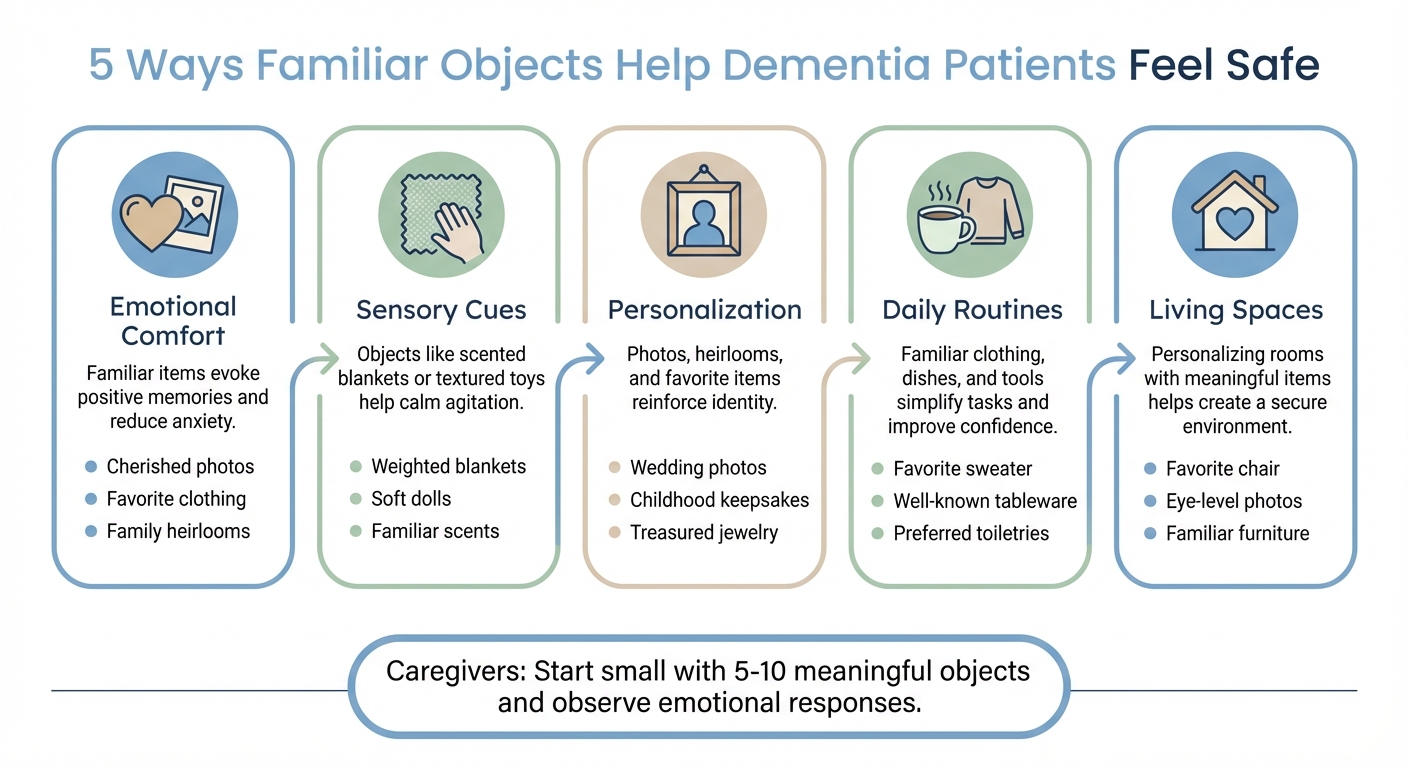
5 Ways Familiar Objects Help Dementia Patients Feel Safe and Secure
Why Familiar Objects Provide Comfort to Dementia Patients
Emotional Anchors Through Familiarity
Familiar objects act as emotional touchstones, helping to ease anxiety and foster a sense of well-being by offering a feeling of security. For individuals with dementia, recognizing items from their past – like a treasured sweater, a family heirloom, or even traditional fixtures such as manual taps and toilet flushes – can reestablish a connection to their personal history. This connection often brings a sense of stability and reduces feelings of confusion or disorientation.
Wearing a favorite piece of clothing, for example, can evoke comforting memories and reinforce a sense of safety. Similarly, traditional fixtures align with long-practiced habits, enabling individuals to maintain some level of independence in their daily routines.
Sensory Cues That Bypass Cognitive Decline
Beyond emotional comfort, familiar objects also provide sensory cues that can bypass the cognitive challenges caused by dementia. These objects engage the senses in ways that don’t rely on memory recall. The scent of a particular perfume, the feel of a favorite blanket, or the sight of a cherished photograph can trigger recognition and calm agitation, even when verbal memory is diminished. These sensory triggers tap into emotional responses, creating meaningful moments of connection.
For those who face difficulties with verbal communication, items like stuffed animals or soft dolls can help bridge the gap, fostering interaction and emotional comfort. Occupational Therapist Valerie Pena highlights the transformative power of such approaches:
“Occupational therapy transforms hopelessness into hope.”
Keeping the environment consistent – such as ensuring furniture and personal items remain in familiar places – can also help reduce visual confusion and ease anxiety. Even small changes, like using contrasting colors to make familiar objects more noticeable, can significantly support a person’s independence and overall comfort.
sbb-itb-48c2a85
How to Choose the Right Familiar Objects
Family Photos and Personal History
When creating a comforting space for someone with dementia, opt for photos that evoke long-ago memories. Since Alzheimer’s often impacts short-term memory first, images from childhood, early adulthood, or major life milestones tend to resonate more than recent ones. For example, a photo of a childhood friend or a wedding from decades ago might spark recognition and joy, while newer images may not have the same effect.
The Alzheimer’s Association highlights the importance of fostering connection over testing memory:
“The goal is connection, not testing memory. Follow the person’s lead, and let the moment unfold naturally”.
If a photo brings a smile or prompts a conversation, it’s a keeper. On the other hand, if it causes confusion or distress, it’s best to remove it. Stick to simple, uncluttered photos, avoiding those with busy patterns or backgrounds, as they can overwhelm someone struggling with visual processing. Pair these photos with comforting tactile items to create a soothing environment.
Comfort Items for Daily Use
Comfort items can play a big role in easing anxiety and promoting relaxation. For example, weighted blankets are known to help calm the nervous system, making them especially useful during bouts of restlessness or for improving sleep. Familiar clothing, like a well-loved sweater, provides not only tactile comfort but also a sense of normalcy. The scent of these items can evoke positive emotions.
Soft dolls and stuffed animals offer warmth and security, while also fostering a sense of companionship. For added engagement, consider items with interactive features such as sound or movement. Fidget objects, like textured balls or stress relievers, are another great option, providing a safe way to keep restless hands occupied. Treasured heirlooms can also help reinforce a sense of identity and preserve comforting routines.
Personal Heirlooms and Everyday Objects
Everyday items that hold personal significance – like a favorite coffee mug, a piece of jewelry, or frequently used dishes – can help maintain a connection to identity and familiar habits. A curated box of meaningful items, such as clothing to fold or small trinkets, can provide hours of purposeful activity for those who enjoy sorting or organizing.
When choosing these objects, focus on safety and simplicity. Avoid items with small parts that could pose a choking hazard. Use dishes and utensils in contrasting colors to make them easier to identify against the table surface. Additionally, set water heaters to 120°F to prevent accidental burns, as individuals with dementia may lose the ability to gauge temperature. These familiar objects not only provide comfort but also help reinforce a sense of self, making daily challenges a bit easier to navigate.
Incorporating Familiar Objects Into Living Spaces
Personalizing Bedrooms and Living Areas
Creating a personalized space can help dementia patients feel more secure and emotionally grounded. Start by showcasing familiar items prominently in the bedroom. Hang cherished photos at eye level on walls or shelves so they’re easy to see upon entering the room. Use furniture with bright, contrasting colors to aid depth perception and improve safety. A favorite chair with sturdy armrests is another great addition, offering both comfort and support.
Lighting is another key factor in fostering a safe and calming environment. Motion-activated lights can guide patients to the bathroom at night, reducing disorientation. Bedside touch lamps with adjustable brightness are easier to use than traditional switches and offer more flexibility. While the room should be dark enough for restful sleep, a nightlight can provide reassurance for individuals who feel uneasy in total darkness.
Mirrors can sometimes cause distress if patients don’t recognize their reflections, so consider removing or covering them. To minimize overwhelming background noise, incorporate soft furnishings like cushions, curtains, and carpets, which help absorb sound. Labeling drawers and cupboards with both pictures and words – like a photo of socks paired with the word “Socks” – can also enhance confidence and independence.
These thoughtful touches can make a significant difference, not just at home but also during transitions into care facilities.
Making Care Facilities Feel More Like Home
Personalizing spaces in care facilities can create a comforting, home-like atmosphere, easing the adjustment process. Bringing familiar belongings right away can help patients feel more at ease. Becky Bongiovanni, Brand President of CarePatrol Franchise Systems LLC, highlights the importance of this approach:
“Moves to assisted living, memory care or other levels of support often bring feelings of anxiety or uncertainty. That’s why making a nursing home room feel like ‘home’ is so important”.
Consider bringing meaningful furniture from home, like a favorite chair or a chest of drawers with personal significance. For example, in October 2025, CarePatrol shared a story about a former ballerina who had a ballet bar installed in her nursing home room. Her space was decorated with performance photos and old ballet slippers, helping her maintain her identity and sense of self. Adding a personalized sign or seasonal decoration to the exterior door can also help with room identification. Finally, opt for solid-colored bedding instead of busy patterns, which can sometimes create confusion or visual illusions.
Using Familiar Objects in Daily Routines
Boosting Confidence During Dressing and Grooming
Favorite clothing items can make dressing less stressful and more manageable. Having duplicates of preferred outfits allows for easy swaps with clean clothes, avoiding unnecessary disagreements or confusion.
Simplify choices by offering only two outfit options at a time instead of showing the whole closet. This reduces the feeling of being overwhelmed. Lay out clothing in order – on a plain background – starting with underwear, then pants, and finally the shirt. Adding labels with pictures and words to drawers or closets can also help individuals locate their own clothes, promoting a sense of independence.
Familiar toiletries, such as a preferred brand of toothpaste, shaving cream, cologne, or makeup, can make grooming feel normal and comforting. These recognizable products, with their familiar scents and textures, help reduce anxiety. For safety, consider using electric shavers instead of traditional razors – they’re safer while still looking familiar. Demonstrating grooming tasks can also make it easier for the individual to follow along.
Familiarity can also play a big role in easing other daily routines, like mealtimes.
Easing Mealtime with Familiar Items
Using a favorite mug or well-known tableware can make mealtimes more soothing. According to the Alzheimer’s Association, individuals may suddenly develop new food preferences or reject previously liked foods. Familiar items can provide comfort during these changes. Opt for high-contrast dishes, such as white plates on solid-colored placemats, to help distinguish food from the plate and the plate from the table.
Keep table settings simple by avoiding patterned tablecloths and unnecessary utensils, which can cause visual confusion. If utensils become challenging to use, switch to easy-to-eat finger foods like chicken nuggets, small sandwich pieces, or steamed vegetables. Offering only one or two food items at a time can help prevent sensory overload. Always check the temperature of food and drinks, as individuals may lose the ability to sense if something is too hot. Sharing meals with the individual can maintain the social aspect of eating and provide cues for mealtime behavior.
From clothing to tableware, familiar items play a key role in creating calm and comfort in daily routines.
Providing Comfort in Stressful Moments
Familiar objects can also provide reassurance during times of distress. Items like stuffed animals or dolls can help ease agitation and encourage emotional connection. A 2021 ethnographic study highlighted that interacting with familiar objects can give individuals with dementia a sense of continuity, helping them feel more grounded and less disoriented. In lab studies, people with Alzheimer’s were better able to recognize and use their own familiar objects compared to generic ones, which encouraged speech and meaningful interactions.
Simple tasks, like folding a clean towel or flannel, can offer comfort through repetitive, familiar motions. These activities can be calming and help reduce agitation. Sensory objects, such as textured balls or knitted fiddle toys, can also promote focus and relaxation. Pay attention to personal preferences for textures like satin or wool and familiar scents to enhance stability and comfort. Avoid items with loud noises, flashing lights, or strong unfamiliar smells, as these can overwhelm or upset the individual.
The doll helping people living with dementia | HUG
Practical Tips for Caregivers
Helping someone with dementia thrive often starts with creating a calming, familiar environment. These practical tips can guide caregivers in making thoughtful choices.
Start Small with a Few Key Items
Focus on introducing just a handful of meaningful objects – five to ten at most – to avoid overwhelming the patient. Building a dementia-friendly space takes patience and experimentation. Prioritize items tied to long-term memories, like childhood toys or keepsakes from early adulthood, as these often remain vivid even when short-term memory fades.
For example, personalized photo albums can be a great starting point. Pay attention to how the patient reacts – do they smile, linger on certain images, or comment on specific memories? Over time, you’ll notice patterns that reveal which objects hold emotional value. In one touching case from 2024, a family brought back “Edward Bear”, a well-loved plush toy their mother had cherished as a child. Despite advanced cognitive decline, she began speaking to the bear regularly, telling her family he “knows how to listen.” This simple reintroduction became a game-changer for her emotional well-being.
Once you identify these key objects, organize them so they’re easy to find and use.
Rotate and Secure Items
Keep frequently used items visible and accessible, ideally at eye level in a clutter-free space. As dementia progresses, changes in vision, hearing, and depth perception can affect how patients interact with their surroundings. What feels comforting today might confuse or upset them later, so flexibility is key.
Make adjustments slowly – introduce or remove items one at a time rather than overhauling the environment all at once. If an object no longer brings joy or begins to cause distress, swap it out for something else. Visual cues, like using contrasting colors, can help the patient locate their favorite chair or distinguish personal items from the room’s background. For cherished heirlooms or irreplaceable keepsakes, store duplicates or backups safely to avoid accidental loss.
Regularly reassess these arrangements to ensure the environment remains supportive and calming.
Track Emotional Responses
Pay close attention to how the patient reacts, both verbally and non-verbally, to different objects. Research shows that sensory items can significantly enhance communication and emotional well-being in dementia patients. Watch for cues in how they interact with objects – if they describe something as “comforting” or “unsettling”, it may reflect their inner feelings.
Transitions, like moving between rooms or preparing for bed, are good opportunities to observe how certain items influence their mood. Do they naturally reach for specific objects? Does their sleep improve or agitation decrease when certain items are nearby? Experiment with sensory tools like weighted blankets, textured mats, or soft dolls, and take note of any changes in restlessness or anxiety. Offering simple choices between two items can also help the patient feel involved in their care.
By staying attentive and making thoughtful adjustments, caregivers can create a supportive environment that reinforces a sense of safety and identity for their loved ones.
For more tools and resources tailored to caregivers, check out ElderHonor at https://elderhonor.com.
Conclusion
Familiar objects play a powerful role in helping dementia patients feel grounded, maintain a sense of identity, and navigate their daily lives. Whether it’s a treasured family photo or a well-worn sweater, these items can spark positive memories and provide comfort. Considering that one in five individuals with cognitive decline receives no care, the importance of caregivers and supportive environments cannot be overstated.
Start small – introduce meaningful items, observe how they respond, and make adjustments as needed. Personalizing spaces with visual cues and familiar objects can encourage independence, while comfort items offer a sense of security through touch. As specialist Alistair Burns emphasizes:
“Establishing a safe nighttime setting is essential for helping individuals with cognitive impairments feel secure.”
These thoughtful actions can make day-to-day caregiving more manageable and improve the overall well-being of your loved one.
Caregiving can sometimes feel like an uphill battle, but you don’t have to do it alone. The ElderHonor Toolkit provides practical resources, including guides on aging in place, tips for having tough conversations, and strategies for creating supportive environments. With assessments, worksheets, and coaching, ElderHonor is designed to help you make informed decisions and reduce stress.
Ultimately, surrounding dementia patients with familiar and meaningful objects helps create a safe and comforting environment, enhancing their quality of life. For more tools and guidance tailored to your caregiving journey, visit https://elderhonor.com.
FAQs
How do I know which objects will actually comfort them?
To identify objects that bring comfort to someone with dementia, pay close attention to how they react to familiar items. Look for things that spark a positive response – this could be family photos, cherished heirlooms, stuffed animals, or even a favorite piece of clothing. If an object seems to soothe them or capture their attention in a meaningful way, it’s likely a good choice. Finding the right items may take some experimentation, but prioritizing those linked to happy memories or emotions often works best.
Can familiar items ever make dementia symptoms worse?
Familiar objects can sometimes be a source of confusion or even distress for individuals with dementia, especially if those items bring up unpleasant memories or are misunderstood. This can worsen their symptoms. To help prevent this, opt for items that carry positive associations and are simple to identify.
What should I bring when moving them into memory care?
When helping a loved one move into memory care, consider bringing along familiar items that offer comfort and a sense of security. Things like family photos, cherished heirlooms, or personal possessions can make the new environment feel more like home. Be sure to check with the facility about what items are permitted. Focus on packing items that are meaningful and easy for your loved one to recognize – this can help ease anxiety and minimize confusion during the transition.