
< intro >
What Physical Needs and Home Conditions Can Trigger Sundowning?
Fatigue, Hunger, Pain, Illness, and Medication Problems
Check basic needs before symptoms usually begin. Review meals, fluids, toileting, bowel movements, comfort, room temperature, and sleep. Offer only allowed fluids. Watch for pain signs that don’t involve words, such as grimacing, guarding a body part, moaning, or resisting movement. Constipation and trouble urinating can also cause distress. These triggers often overlap, so check basic needs, medicines, and surroundings together.
Check whether prescribed medicines were taken and whether any were recently started, stopped, or changed. Follow the missed-dose instructions for each medicine. Don’t double doses or change schedules yourself. Ask the pharmacist or prescriber about suspected side effects.
Call the clinician about new or worsening illness symptoms. Confusion alone does not prove a urinary tract infection. Contact a clinician rather than requesting antibiotics based only on behavior.
Dim Light, Shadows, Noise, and Changes in Routine
Reduce sensory overload at home. As daylight fades, familiar rooms can seem unfamiliar. Turn lights on before dusk, reduce glare, and check that glasses and hearing aids are working. Lower the television volume and have one person speak at a time.
Keep meals and bedtime consistent, plan demanding tasks earlier in the day, and allow extra transition time for visitors or caregiver changes. If several factors seem likely, start with the easiest changes.
Trigger Comparison: Signs, Home Responses, and Medical Help
Use this table to connect a behavior with a possible trigger and response – not to diagnose the cause. Some behavior changes need medical care rather than home care alone.
| Trigger or warning sign | What caregivers may observe | Immediate home response | When to seek medical help |
|---|---|---|---|
| Fatigue | Sleepiness, irritability, pacing | Stop demanding tasks; offer quiet rest | Call the clinician for repeated sleep problems, sudden severe confusion, or difficulty staying awake |
| Hunger or thirst | Dry mouth, weakness, restlessness | Offer a familiar snack and allowed fluids | Call the clinician for persistent poor intake, vomiting, dehydration signs, or difficulty meeting fluid limits |
| Pain | Grimacing, guarding, resistance to movement | Adjust positioning; check clothing and toileting; use approved pain measures | Call the clinician promptly for new, severe, unexplained, or uncontrolled pain |
| Infection symptoms | Fever, chills, cough, painful urination, abrupt decline | Record temperature and symptoms; contact the clinician | Call the clinician the same day for new infection symptoms or a sudden change in mental status |
| Medication problems | Missed doses, dizziness, new sleepiness or hallucinations | Check the medication record; follow medicine-specific missed-dose instructions | Call a pharmacist or prescriber for suspected side effects, repeated errors, or major changes |
| Dim light or shadows | Fear of corners, reflections, or misidentified objects | Improve even lighting, reduce glare, clear pathways | Call the clinician for new visual hallucinations, sudden vision changes, or persistent symptoms |
| Noise | Covering ears, shouting, withdrawal | Turn off background sound; move to a familiar quiet room | Call the clinician for persistent agitation or safety concerns |
| Routine changes | Repeated questions, resistance after schedule or caregiver changes | Restore familiar steps; give calm reminders | Call the clinician for persistent worsening, major functional decline, or symptoms after medication or routine changes |
Call 911 for severe breathing difficulty, chest pain, stroke signs such as one-sided weakness, unresponsiveness, or immediate danger to the person or others. Sudden confusion, severe pain, or inability to drink needs urgent medical assessment.
sbb-itb-48c2a85
How Can Families Track Early Warning Signs?
Log Symptoms, Daily Care, Medicines, and Surroundings
Once you know the common triggers, keep one daily log to link behavior changes with possible causes and spot small changes early. Include the date, start and end times, and specific behaviors, such as pacing, repeated questions, withdrawal, or attempts to leave. Note the person’s usual alertness, appetite, and mobility so you have a baseline for comparison.
Track sleep, meals, snacks, fluid intake in ounces, pain, bowel movements, urinary symptoms, and other signs of illness. Add temperature in °F when relevant. List all medicines and supplements, including prescribed and actual dose times. Note any doses that were late, missed, refused, or vomited.
Include visitors, appointments, routine changes, lighting, shadows, and noise. Record what happened just before symptoms began, what you tried, and how the person responded. Add times to make the sequence clear.
Look for Patterns and Share Them With the Clinician
After several days, check for repeats: missed snacks, late naps, medication delays, busy evenings, or shadows around dusk. Treat these as clues, not proof. Try one low-risk change at a time, such as more even lighting before dusk. Then note whether episodes start later, last less time, or become less intense. Use the log to guide the prescriber – not to change doses yourself.
Keep a shared notebook or secure digital record. Limit access to caregivers involved in care, leave out unnecessary identifying details, add caregiver initials, and mark any estimated times. Promptly share the log and current medication list with the clinician if you notice new or worsening patterns, physical symptoms, or repeated episodes that affect safety.
If confusion starts suddenly or you suspect illness, seek medical assessment now and bring the log. A sudden or unsafe change calls for medical help right away, rather than more tracking.
Sundowning in Dementia: Signs, Causes, and How to Help
What Should Families Do During a Sundowning Crisis?
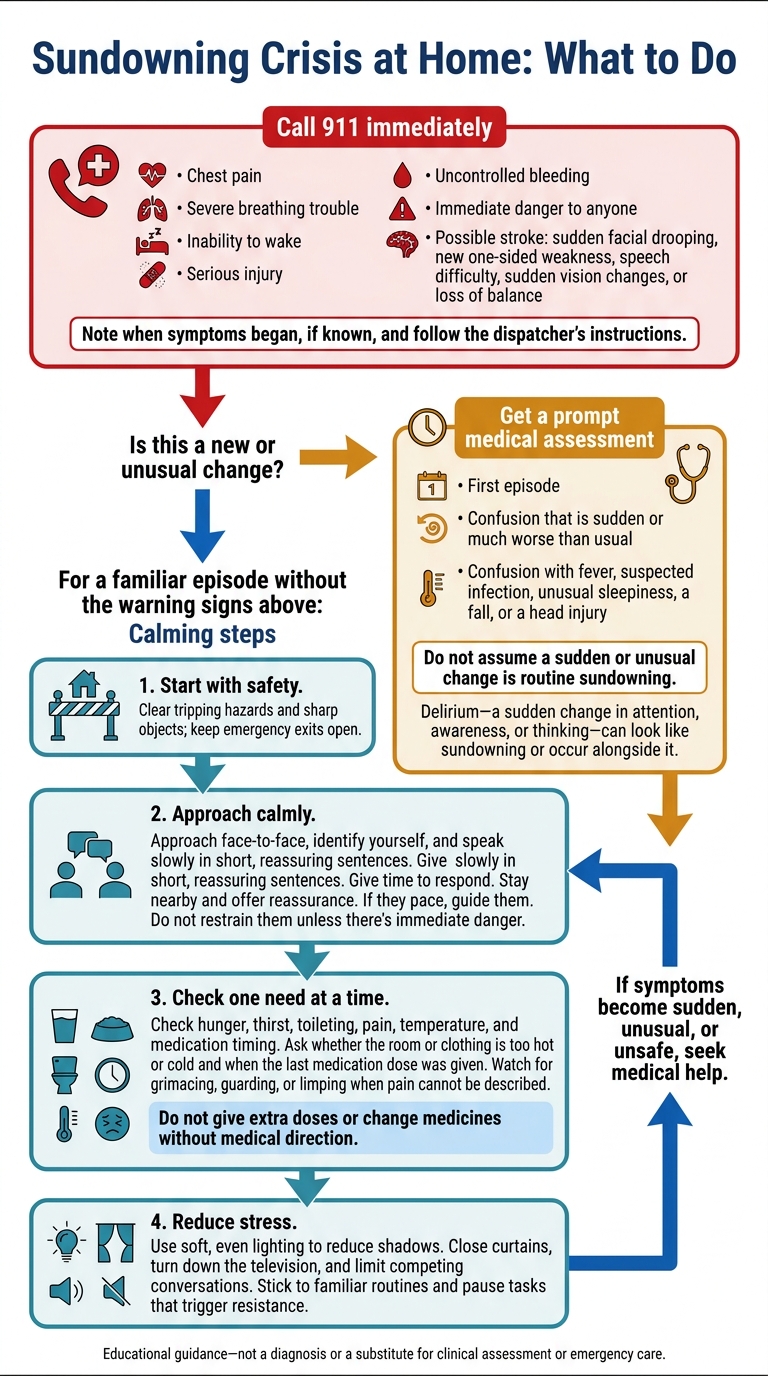
Sundowning Crisis at Home: What to Do
Stay Calm, Check Needs, and Reduce Stress
Let the trigger pattern you’ve tracked guide your first step. Start with safety, then check hunger, thirst, toileting, pain, temperature, and medication timing. Clear tripping hazards and sharp objects, but keep emergency exits open.
Approach face-to-face, identify yourself, and speak slowly in short, reassuring sentences. Give the person time to respond. Stay nearby and offer reassurance. Do not restrain them unless there’s immediate danger. If they pace, guide them.
Check one need at a time. Is the room or their clothing too hot or cold? When was their last medication dose? Do not give extra doses or change medicines without medical direction. If they can’t describe pain, watch for grimacing, guarding, or limping.
Use soft, even lighting to reduce shadows. Close curtains, turn down the television, and limit competing conversations. Stick to familiar routines and pause tasks that trigger resistance.
When to Seek Medical Care or Call 911
If an episode differs from the person’s usual pattern, move from calming steps to medical evaluation. Get a prompt medical assessment if this is their first episode, or if confusion is sudden, much worse than usual, or occurs with fever, suspected infection, unusual sleepiness, a fall, or a head injury.
Delirium – a sudden change in attention, awareness, or thinking – can look like sundowning or occur alongside it. Do not assume a sudden or unusual change is routine sundowning.
Some symptoms need emergency help rather than home care.
Call 911 immediately for chest pain, severe breathing trouble, inability to wake, serious injury, uncontrolled bleeding, or immediate danger to anyone. Possible stroke signs include sudden facial drooping, new one-sided weakness, speech difficulty, sudden vision changes, or loss of balance. Note when symptoms began, if known, and follow the dispatcher’s instructions.
Conclusion: Make a Shared Sundowning Crisis Plan
Write Down Triggers, Calming Steps, Contacts, and Caregiver Roles
Once you identify likely triggers and warning signs, create a shared one-page plan. Include typical evening behavior, episode times, early warning signs, and known triggers. Note preferred foods, drinks, reassuring words, activities, routines, hearing or vision supports, and wandering or fall risks. Keep brief episode notes so you can update the plan and share changes with the clinician.
Add the details your family may need during a crisis: current medicines, doses, timing, allergies, and clinician and pharmacy contacts. Assign responsibility for evening supervision, medicine checks, clinician calls, documentation, and backup care. Include handoff times and clear instructions on when to call the clinician or 911.
Review the plan after medication changes, infection, falls, hospitalization, or major changes in routine.
Use Planning Resources to Coordinate Family Care
ElderHonor offers educational tools and coaching to help organize caregiving roles. Its Toolkit includes modules on starting conversations and aging in place. These resources do not treat sundowning or replace clinical assessment or emergency care.
Keep a dated paper copy at home and a password-protected digital copy. Make sure every family member and paid caregiver reads the same plan. At each shift change, use this handoff checklist:
- Check early and follow the plan: Review the last episode, current needs, and medication timing before the next shift. Reduce evening stressors and use the calming steps that work best.
- Get help: Seek prompt assessment for sudden or unusual changes. Call 911 for immediate danger.
- Record and hand off: Log episode timing, possible triggers, what helped, and concerns for the next caregiver.
FAQs
Can several triggers cause sundowning at once?
Yes. Fatigue, hunger, and changes in surroundings can pile up, leaving older adults feeling overwhelmed. This can be especially hard for those with cognitive changes who depend on routines to manage their energy and emotions. When several stressors hit at once, your parent may struggle to explain what they need.
Tracking patterns over time can help you spot and address overlapping triggers before a crisis develops. ElderHonor offers tools and coaching to help families work through these challenges.
How can I spot pain if my parent can’t explain it?
Watch for sudden agitation, refusal to eat, or increased confusion. These changes may point to pain or infection. Nonverbal signs can include changes in movement or facial expressions, or guarding a body part. Also note restlessness during transitions or sundowning.
Track when these changes happen and any patterns you notice. Share those details with your parent’s primary care physician to help identify the cause.
How long should I track symptoms to find patterns?
Keep simple weekly notes and look for patterns, not isolated incidents. Changes like weight loss or worsening sleep may only become clear over several months.
If you’re trying to decide whether a parent needs more help, two weeks of notes may be enough to spot an early pattern. That can help you decide whether to try a small change or talk with a doctor.